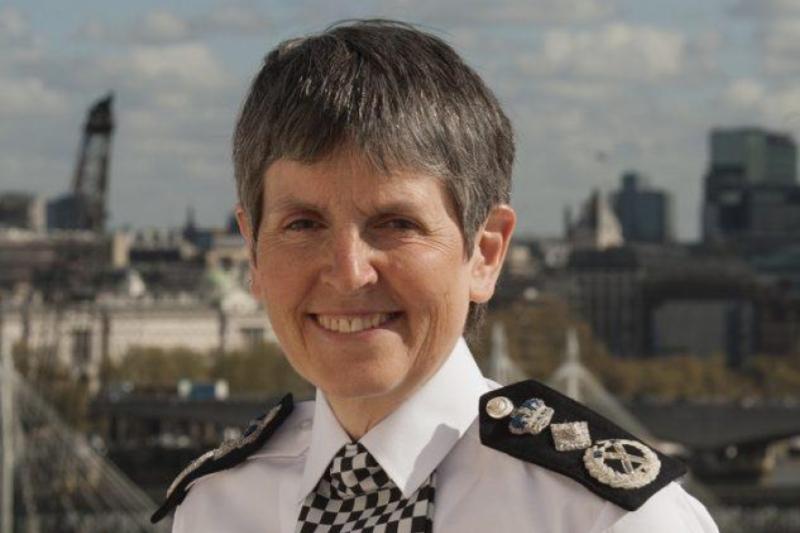
Met Commissioner backs major campaign to build a new UK Police Memorial
Opinion: Met Commissioner Cressida Dick explains why she is supporting the new UK Police Memorial campaign.
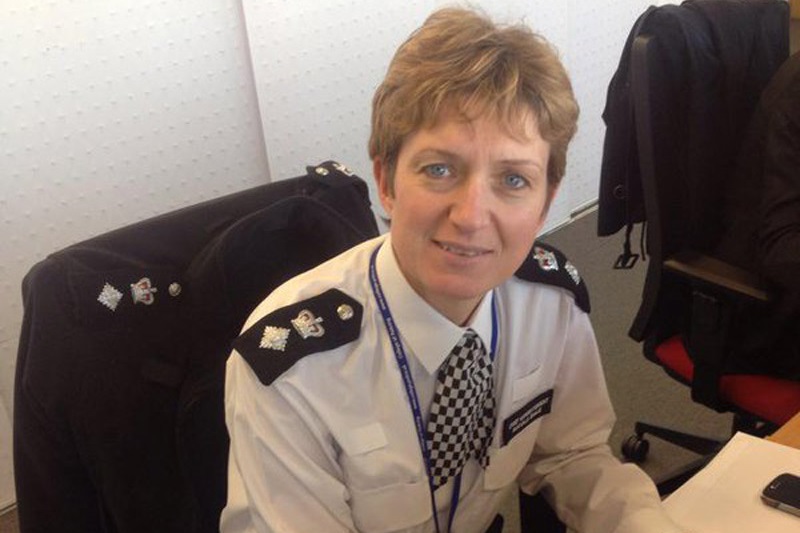
Opinion: As she prepares to retire after 30 years in the police service, the College of Policing's Lead on Direct Entry, Chief Superintendent Nicola Dale, looks back on her last three years in post.
OPINION: Evidence-based policing has seen tremendous growth in the last few years, but has yet to reach the 'tipping point' where it becomes the norm. Chief Supt. Owen West argues that what's needed is an appetite for risk, and an investment in frontline officers.
ANALYSIS: Since the end of the Neighbourhood Policing Programme (NPP) in 2009, the work of neighbourhood teams across the country has significantly diverged. The Police Foundation are undertaking a major project to track these developments, and are looking for police officer and staff insights into what's been happening neighbourhood policing in your area.
NEWS: A successful bursary scheme to allow police officers and staff to get higher education qualifications is to reopen for applications later this year. Karin Rogers of the College of Policing explains how the bursary works and why it's good for individual officers and policing as a whole.
OPINION: The Cambridge Crime Harm Index offers a new way of measuring crime, by the damage it does rather than the volume of incidents. Supt. Dave Hill and Dr Laura Knights of the East Midlands Policing Academic Collaboration (EMPAC) report on a discussion of what the problems and prospects are for putting the Cambridge Crime Harm Index into practice.
OPINION: Evidence-based policing makes sense in theory - but what about the practice? Serving officer Nathan Constable looks at the problems in embedding new initiatives, and argues that the police service might need to slow down if it wants to speed up the effective implementation of EBP.
OPINION: How can football policing be made less confrontational and more family-friendly? Chief Superintendent Owen West of West Yorkshire Police reflects on the work of ‘Enable’ – a multi-stakeholder research partnership aiming to develop good practice in the safety and security challenges facing professional football in Sweden.
OPINION: Yesterday's report from the HMIC - The State of Policing in England and Wales - emphasised the lack of proper funding for mental health, and the way policing has been forced to become the service of first resort. Serving officer Nathan Constable - who has warned of this for some time - highlights the key issues around police responses to mental health crises.
ANALYSIS: The latest HMIC report, The State of Policing in England and Wales, was overshadowed by a row about the traumatic experiences suffered by uniformed officers. However, the report is an important one, addressing key issues around demand, resourcing and mental health. Carina O'Reilly, editor of Policing Insight, assesses the report.
ANALYSIS: Despite appearances (and headlines), the police service has been one of the public sector's success stories over the last few years, making significant cuts with less damage to services than other sectors. Emily Andrews of the Institute for Government examines the data through the IfG's new Performance Tracker - but warns there could be trouble ahead.
OPINION: Police cells are no place for people in mental health crisis, but new legal provisions due to come in will allow their detention in 'exceptional circumstances'. Serving officer Nathan Constable warns that people presenting as violent and unmanageable - the symptoms of 'excited delirium' - are the most likely to be detained, but also the most at risk from restraint.
OPINION: Direct entry is a controversial topic, and has generated a lot of debate. While few would argue that those who have joined through the scheme are dedicated and sincere, policing commentator Graham Wettone argues that nothing can replace direct experience of policing - especially at Inspector level.
OPINION: The Direct Entry debate has returned to the headlines in recent weeks with the suggestion that Chief Constables might in future be drawn from outside the service. Supt. Maggie Blyth, one of the first Direct Entry superintendents, says there's a huge amount of talent in policing - but there still might be advantages in looking outside.
OPINION: There has been a lot of recent debate about degree-level entry and the 'professionalisation' of policing. Emma Williams of Canterbury Christ Church University has been heavily involved in work to recognise serving officers' existing skills and capacities. Here, she outlines what 'Recognition of Prior Experiential Learning' will mean.
OPINION: Policing research used to be dominated by research on the police, designed, directed and carried out by academic researchers. However, recent years have seen a move towards co-production of research with police. Sean Butcher, a PhD student at the University of Leeds, reports from a workshop on the challenges of co-production, and how this move might be sustained.
OPINION: There is an ongoing debate within policing about the value of academic input, and whether evidence-based policing can offer the kind of knowledge that policing needs. Chief Superintendent Owen West looks at the arguments, and calls for academic collaboration to confront the politics of knowledge within the police service itself.
ANALYSIS: The policing landscape is undergoing tremendous change. Supt Dave Hill, Programme Director for the East Midlands Police Academic Collaboration (EMPAC) examines the 'VUCA' model - volatile, uncertain, complex and ambiguous - to help find a path for policing in the 21st century.
OPINION: Rural crime costs millions of pounds and can be devastating for victims – but is often overshadowed by urban demand. Cambridgeshire PCC Jason Ablewhite, who grew up on a farm, explains how the Rural Crime Action team - many of whom have farming backgrounds themselves - is building confidence in the police in rural communities.
Interview: The company behind the TASER X2 hopes its latest device will boost public reassurance and police accountability, but Matt Spencer, MD, Axon Public Safety, says changes to the latest model are just the beginning of a technological revolution in policing.
OPINION: Degree level entry to the police is a hugely controversial issue for many serving officers, who feel that the proposals undermine them - but is this fair? Serving officer Dan Reynolds examines the Police Educational Qualifications Framework and what it offers for those already in the force.
OPINION: Direct Entry has been met with some hostility from police officers - but what is the problem it's meant to solve? Serving officer Gareth Stubbs looks at the insularity of the police service and what Direct Entry might offer to forces.
OPINION: At a time when police are facing significant organisational change, it's increasingly important that rank and file officers are engaged with this process. Emma Williams of Canterbury Christ Church University makes the case for listening more closely to officers - and backs @West_Response's call for the introduction of a front line impact assessment.
OPINION: The death of Ian Tomlinson in 2009 during the G20 protests led to a fundamental re-examination of public order policing in the UK. But why has that learning not been embedded in the policing of football crowds? Chief Superintendent Owen West of West Yorkshire Police reports from an expert seminar at Keele University, and asks what are the police waiting for?