

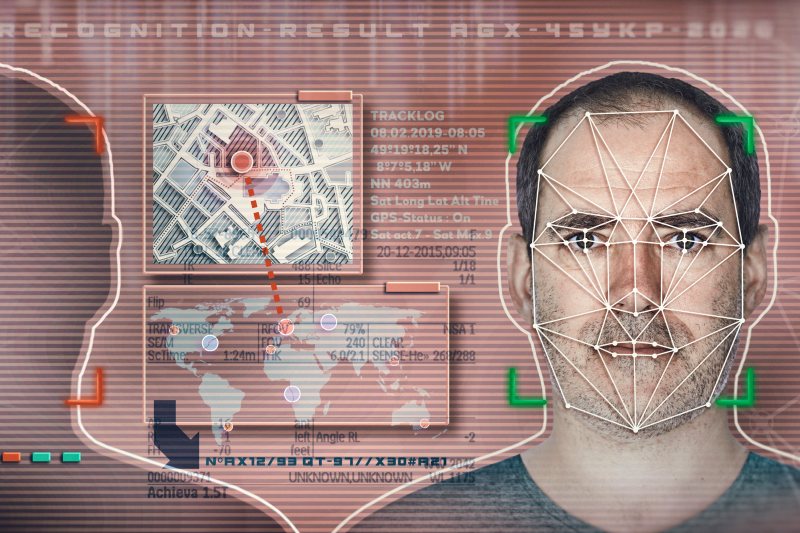
AI technologies are advancing to such an extent that RFR systems will be able to adaptively correct for poor lighting, angles, motion blur, and aging effects making matching far more reliable.
Rising to the challenge
There have always been factors that have challenged the effectiveness of Facial Recognition Technology – be it environmental, such as low-light conditions, or societal, such as shielding or wearing disguises – but we have already entered an era where there are now technological hurdles that have to be overcome to ensure that RFR remains one of law enforcement’s key investigative technologies.
So what can we expect to become ‘business as usual’ over the next 2 – 5 years?
- Accuracy and Resilience
Whilst the resolution and capabilities of CCTV cameras are improving rapidly there will always be a vast number of older systems that agencies will need to be able to extract and use footage from – some will be their own but the vast majority will be third party owned. AI technologies are advancing to such an extent that RFR systems will be able to adaptively correct for poor lighting, angles, motion blur, and aging effects making matching far more reliable when using real-world CCTV and archival footage.
- Image integrity detection
It is not just the analysis of the raw footage that will improve accuracy and resilience of RFR systems. Integration of 3D face reconstruction and liveness detection will significantly reduce false positives and new developments will process multiple frames, to exploit temporal consistency, and integrate memory mechanisms that will boost efficiency when using large volumes of footage.
In a world of image manipulation RFR systems will need to keep pace and embed tools to identify altered frames and spot fakes by analyzing subtle facial artifacts and inconsistencies
- Edge to Cloud hybrid processing
As the volume of sources increases and capture technology improves initial encoding and noise filtering will increasingly move to edge devices, reducing network and data traffic and cloud-hosted RFR systems will routinely match millions of archived frames per second, enabling suspect identification within minutes instead of days.
Building platforms for the future
NEC’s Reveal provides a comprehensive set of standard and advanced image processing enhancements to improve image quality and matching ability.
NEC Reveal enables investigators to enhance poor-quality face images for comparison to their image repositories.
Reveal enables investigators to enhance poor-quality face images for comparison to their image repositories. This allows system operators to create a list of all potential matches while maintaining a full audit trail for each step in the image enhancement process.
Standard image enhancements can help skilled experts by improving detail and removing background noise. Enhancements include crop/rotate, brightness, contrast, intensity, smooth, sharpen, histogram equalization, noise reduction, aspect ratio correction, and de-interlacing.
A cloud-native solution built on Microsoft® Azure®, Reveal is a cost-effective biometric solution purpose-built to lower total cost of ownership. Future upgrades and additional capabilities include:
- EverBlu Algorithm, lifetime algorithm updates, ensuring your investment remains cutting-edge indefinitely.
- Elastic matcher delivers greater accuracy and faster facial recognition matching, further empowering morphological analysis for forensic examiners to review 18 different points on the face for more detailed verification.
- Tattoo recognition, providing forensic examiners with more tools for investigations.
Ensuring ethical and proportionate use
Acceptance of the use of Facial Recognition technology is ever-increasing, with a recent report stating that 85% of Londoners support the use of facial recognition to improve safety and 74% trust the Metropolitan Police more due to its use of the technology.[i].
NEC’s NeoFace algorithm is ranked first for accuracy in the US National Institute of Science and Technology’s annual ratings.
NEC’s NeoFace algorithm is ranked first for accuracy in the US National Institute of Science and Technology’s annual ratings. Built on 40 years of experience, it copes well with ageing, angles, headwear and poor lighting. It also comes with built-in safeguards to support proportionate use, with auditing and reporting and a range of data retention tools.
AI-enabled facial recognition already supports investigations in almost half of EU member states[ii]., as well as multiple agencies in the US and UK. When it helps to make investigations faster and more efficient, it’s easy to see why.
Click here to find out more and request a demo of our next-generation RFR platform.
[i] Live Facial Recognition helping to make the capital safer, according to new report | Metropolitan Police
[ii] Computer Law and Security Review, April 2025