
A new person of interest is identified during a local drug sweep. A phone number from an unrelated human trafficking case reappears in a fresh investigation. A residential address is linked to a dozen seemingly disconnected shell companies.
The challenge is not simply identifying offences. It’s understanding how those activities connect, and how the wider network operates.
Each incident is dealt with on its own terms. Intelligence is gathered, assessed and acted on. In many cases, that leads to seizures, arrests or disruption.
But these incidents are rarely isolated.
They often form part of wider networks that coordinate illicit activity across jurisdictions, reusing shared infrastructure, adapting operational methods, and obscuring identities to avoid detection.
The challenge is not simply identifying offences. It’s understanding how those activities connect, and how the wider network operates. In practice, that is often harder than it should be.
This article examines how a more connected approach to intelligence helps move beyond isolated interventions, giving a clearer view of how organised criminal networks operate and where intervention is most effective.
The difficulty of seeing the whole picture
Individual incidents rarely provide enough context on their own.
Instead of rebuilding the picture each time, it becomes possible to trace how people, locations and organisations appear over time, and how those relationships change.
A seizure or traffic stop may uncover activity, but understanding how that activity fits into a wider network depends on how well information can be brought together and interpreted over time.
Information from different investigations and sources can point to the same people, locations or organisations. The challenge is working with those connections in a way that holds together as new material is added.
When that picture is fragmented or tied too closely to individual investigations, it becomes harder to see how activity develops or how different strands of intelligence relate.
A more connected approach allows that context to carry across investigations.
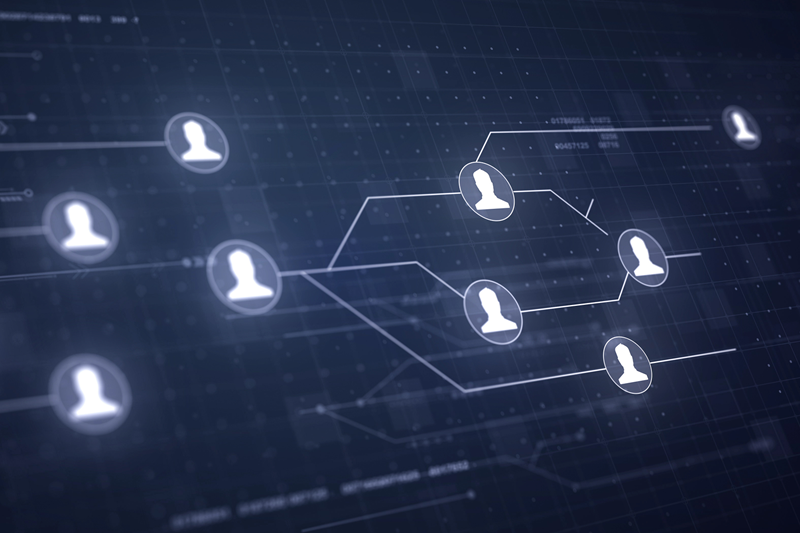
Instead of rebuilding the picture each time, it becomes possible to trace how people, locations and organisations appear over time, and how those relationships change.
In practice, this supports four key activities:
- Identifying the right people and entities to prioritise
- Locating where activity is taking place
- Associating that activity with a wider criminal infrastructure
- Disrupting the network more effectively
1. Identify: focusing on the right people early
The first step is deciding where to focus.
A connected view allows analysts to bring together signals from multiple sources and investigations. Shared addresses, overlapping company records, repeated contact patterns or financial links that would be difficult to spot in isolation become visible earlier.
This also supports broader scanning across available data.
For example, a retailer with unusual excise patterns may not stand out on its own. But when combined with links to known entities, changes in company structure or relationships with other flagged actors, it becomes easier to assess risk.
The result is earlier direction, based on context rather than isolated indicators.
2. Locate: understand where activity is happening
Once entities of interest are identified, the next step is understanding where activity is taking place and how it moves.
Adding geographic context to connected data helps analysts identify:
- Clusters of related activity across locations
- Movement of assets between acquisition, storage and use
- Locations or methods that recur across otherwise disconnected investigations
This allows teams to prioritise enforcement and surveillance where it will have the greatest effect, rather than responding to each incident in isolation.
3. Associate: uncover the wider network
Organised criminal networks rarely operate in isolation.
They are often linked to wider criminal activity, including financial crime, organised violence and exploitation. These links are not always visible within a single investigation.
A connected approach makes it easier to trace:
- Shared infrastructure, such as warehouses and communications networks
- Financial relationships between suppliers and front companies
- Links between domestic and offshore operations
This shifts the focus from a single offence to the structure supporting it.
4. Disrupt: act on the network, not just the incident
With a clearer understanding of how activity is organised, disruption becomes more targeted.
Instead of focusing only on seizures or individual actors, teams can identify:
- Individuals with the greatest level of influence or connectivity
- Entities that enable or coordinate activity
- Financial dependencies that sustain the network
This supports action that affects the network as a whole rather than a single part of it.
From reactive intervention to targeted disruption
Organised criminal networks are resilient because they are organised.
They adapt when operations are disrupted, replace individuals when arrests are made and reuse infrastructure across different operations. When intelligence remains tied to individual incidents, enforcement can become reactive, addressing what is visible rather than how it fits together.
A connected approach changes that.
When relationships can be traced across investigations and over time, intelligence builds rather than resets. Analysts spend less time reconstructing context and more time understanding how activity is organised and how it is changing.
That creates the conditions for more effective disruption.
Intelligence is connected. The environment should be too
Organised criminal networks operate through relationships among people, organisations, and locations, as well as the movement of goods and money.
Understanding those relationships across time and investigations is central to effective intelligence work.
Where that view is fragmented, important signals are harder to detect and act on. As networks become more distributed and adaptive, that limitation becomes more pronounced.
For those examining how intelligence environments can better support connected analysis, further details on graph-powered intelligence analysis and its practical application in policing are available at graphaware.com.