


While such measures may temporarily address public calls for tougher crime control, there have been significant criticisms of association laws in Australia and internationally.
Reports that Victoria Police are issuing anti-association orders to “youth gang members” has sparked fresh debate about how to best deal with youth gang violence in Australia.
These orders have previously been used to reduce the presence of outlaw motorcycle ‘bikies’ and are an attempt to prevent prospective harm.
While such measures may temporarily address public calls for tougher crime control, there have been significant criticisms of association laws in Australia and internationally.
Instead, we need to understand why young people gravitate to gangs, and consider evidence-based early-intervention solutions.
 What do the stats suggest?
The number of young offenders in Australia is decreasing. However, in Victoria, the number of offences committed by youth (aged 10-17 years) has risen in recent months.
Media and political discourses have consistently portrayed young people, and particularly migrant young people, as being responsible for anti-social, delinquent and criminal behaviour.
This fuels public perceptions that young people are out of control, threatening, violent and dangerous. Data from Victoria Police indicate young people account for just 13% of all offenders, yet media coverage of crime seems to focus mainly on youths.
Youth crime does occur and we recognise that victims experience significant trauma and long-lasting harms. But the over-use and misapplication of the ‘gang’ label by the media and politicians sometimes conflates friendship groups with youth gangs.
There are documented dangers of labelling all youth groups of friends as gangs. A youth gang can be defined as: “Any durable, street-oriented youth group whose involvement in illegal activity is part of its group identity.”
Gangs are often a group of delinquent friends, perhaps drawn together by their shared attitudes and propensity for delinquency.
In Australia, gangs rarely go out to recruit members as is sometimes seen in the United States or Central America. This is because Australia has, for the most part, escaped the transnational street gang presence that drives youth recruiting in other countries.
The risk factors of gang involvement
There is no single reason for youth offending. Instead, multiple areas of a young person’s life come together to influence their behaviour: their own beliefs and attitudes, peer group, family, school and community.
After the murders of two boys, aged 15 and 12, in Melbourne’s outer west last September, Victoria Police Detective Inspector Graham Banks said: “We need to get to the root cause of why these people are joining gangs and to make it a situation where they don’t want to be involved in that sort of behaviour.”
There is no single reason for youth offending. Instead, multiple areas of a young person’s life come together to influence their behaviour: their own beliefs and attitudes, peer group, family, school and community.
Although the relative importance of each category changes across childhood and adolescence, a young person’s risk of violence, offending, or gang membership increases as the number of risk factors rises.
Individual risk factors include low self-control, low empathy, antisocial beliefs and attitudes, substance use, or having been victimised themselves.
Despite media portrayals to the contrary, ethnicity or migration background has not been shown to be a risk factor for violence, offending, or gang membership.
Peers are one of the strongest influences on gang involvement, with young people more likely to offend if their peers are delinquent. In the absence of a legitimate pathway to social capital, youth gangs can provide a sense of belonging and social identity for disenfranchised young people.
Family risk factors include lack of parental supervision and abusive or neglectful family environments. Risk factors at school include truancy, low grades, feeling unsafe at school and lack of attachment to school.
Finally, at the community level, we see the impact of risk factors such as socioeconomic disadvantage, low social cohesion and high levels of crime in the neighbourhood.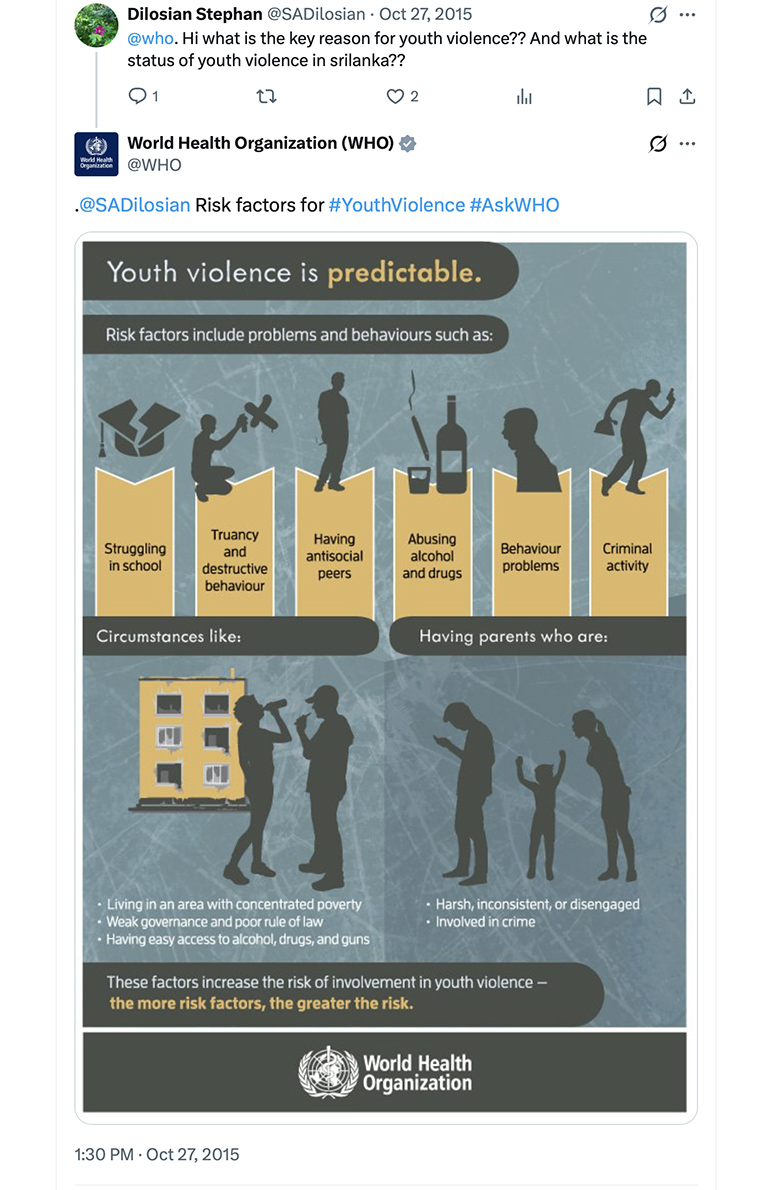 It is important to remember that although these interconnecting risk factors can increase the risk of a young person offending, they do not automatically cause offending.
If a young person has good conflict resolution skills, positive friendships, strong family relationships and opportunities for education and employment, it is likely their risk of offending is lower.
What are some possible solutions?
Current solutions proposed by the Victorian government include machete bans and tougher bail laws. Yet evidence shows harsher bail laws do not have the desired deterrent effect. They also consistently and disproportionately affect those of a lower socio-economic status.
Financially, tough bail and sentencing laws cause unintended consequences that actually cost governments more by failing to break cycles of incarceration.
People on bail have not been found guilty – so removing bail is removing the presumption of innocence.
Queensland’s ‘adult crime, adult time’ policy – which lists 33 offences for which children can receive the same penalty as an adult – has also faced scrutiny for perpetuating harm.
Financially, tough bail and sentencing laws cause unintended consequences that actually cost governments more by failing to break cycles of incarceration.
Violence and gang membership can emerge from a complex interplay of risks across childhood and adolescence. These are unlikely to be shifted by legislation.
Instead, best practice suggests a need to work with young people on early intervention and ideally prevention.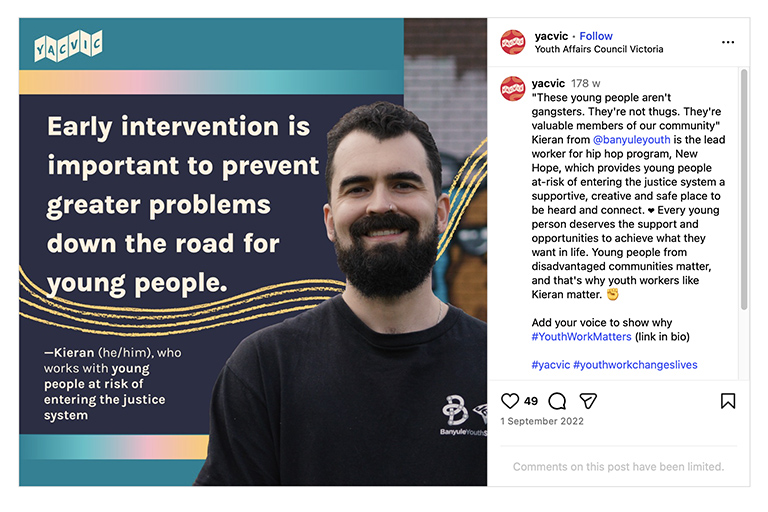 Young people at risk need mentoring, active school engagement and increased employment opportunities. Their families and communities need support.
Supports such as these do exist, including state government programs and organisations such as Mission Australia. These often have good results but are usually underfunded.
Sustainable reductions in youth violence and gang involvement will only be achieved by adequately funding and expanding evidence-based early intervention and prevention programs that address the broader social and developmental needs of young people.
This article first appeared on The Conversation, and is republished under a Creative Commons Licence; you can read the original here.
About the Authors
 Dr Kathryn Benier is a Senior Lecturer in Criminology at Monash University. Kathryn’s research focuses on urban criminology and the neighbourhood ecology of crime, and in particular on hate crime and the impact of immigration and ethnic diversity on social relationships, cohesion and sense of belonging over time. She also has a research interest in family and domestic violence, with a strong focus on the geospatial distribution of offences and consequences of victimisation. Kathryn is co-Director of the International Network of Hate Studies; prior to joining Monash University, she worked at the Australian Institute of Criminology.
 Dr Angela Higginson is an Associate Professor in the School of Justice at Queensland University of Technology. Much of Angela’s research has examined the effectiveness (or potential for harm) of policing strategies. Her current work focuses on the experiences of young marginalised and minoritized Australians, including experiences of youth hate crime victimisation, perceptions of policing, and offending behaviours, and includes the design, implementation, and analysis of the Australian Youth Safety Survey. One of her key research interests is in the use of systematic reviews and meta-analysis to inform evidence based public policy in policing and crime control.
Picture © SpeedKingz / Shutterstock