

Around the world, wildlife and environmental crime is surging. It is estimated to be the fourth largest organised transnational crime sector, and to be growing at a rate two to three times faster than the global economy.
Australia has unique and endemic wildlife species, high extinction rates, and is a country that is difficult to police due to its sheer size and vast remote areas.
This kind of crime can take many forms, from the trafficking and trade of native species to the unlawful removal and clearance of habitat and species, lethal control such as poisoning of native animals, and illegal fishing.
There are several global assessments of these crimes and their impacts. But our understanding of their scope in Australia is limited.
This is a considerable problem, because Australia has unique and endemic wildlife species, high extinction rates, and is a country that is difficult to police due to its sheer size and vast remote areas. Our new, Australia-first study addresses this knowledge gap.
Published in Conservation Science and Practice, it reveals the most prevalent crimes against Australia’s wildlife and environment, and makes four key recommendations for urgent law reform.
Crimes in our backyard
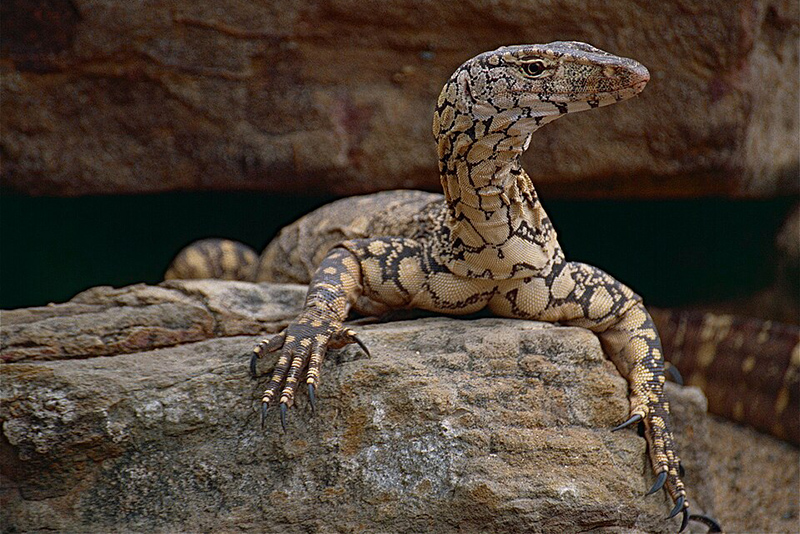
Our unique Australian species, particularly reptiles, are prevalent in the international illegal pet market.
In one high-profile case from late 2024, a man was sentenced to three and a half years in prison for 19 offences of trafficking and export of native Australian wildlife.
He used 24 different post offices across Queensland, New South Wales, Victoria and the Australian Capital Territory to attempt to ship 99 reptiles out of the country in cruel and cramped conditions.
We don’t understand the full extent and impact of these crimes in Australia, but we do know they can be disastrous. Wildlife trafficking and illegal trade erodes biodiversity through the removal of native species from their habitats. It also fuels the spread of invasive species, parasites and diseases.
Illegal harvesting of fisheries and timber can drastically impact populations and ecosystems. Unlawful lethal control of animals can also devastate local populations.
For example, in 2018 a farmhand in rural Victoria was found guilty of illegally killing over 400 wedge-tailed eagles, a large and long-lived bird of prey which is protected by law.
In 2004, employees of a fish farm in Queensland were found to have shot and killed birds including egrets, night herons, pelicans, jabirus and ducks, in numbers one witness estimated to be “in the thousands” over a 14-month period.
The first database of its kind
Over half of the environmental crimes occurred in outer regional and remote areas of Australia. These crimes overlap with areas of both greater environmental concern as well as regions more difficult to police and enforce.
For our new study, we used publicly available prosecutions from the High Court of Australia, the Federal Court of Australia and the Supreme, District and County Courts in each state and territory, to compile a database of wildlife and environmental crime at a national scale. This is the first database of its kind in Australia.
We identified a total of 120 prosecutions between 1995 and 2024. Most of the crimes were classified as unlawful removal or damage (36.7%), illegal harvest (32.5%), or trafficking and trade (17.5%).
The most commonly targeted groups were plant species (40.8%), fish (30.8%) and reptiles (11.7%). Common targets of illegal fishing were abalone and rock lobster.
Over half of the environmental crimes (61.3%) occurred in outer regional and remote areas of Australia. These crimes overlap with areas of both greater environmental concern as well as regions more difficult to police and enforce. An increase in the number of annual prosecutions was also observed over the study period.
Tackling these crimes
Four key measures could help address the causes and effects of wildlife and environmental crime.
1: Community education to promote understanding of the damage these crimes can cause, and the ways members of the community can identify and report offences.
2: Judicial training and support to help sentencing judges understand the damage caused by wildlife and environmental crime, and accept they are “real crimes” and not less serious than offences against people and private property. Sentences and sentencing remarks need to reflect the seriousness of these crimes to effectively deter and punish offenders.
These recommendations could help Australia lead in preventing wildlife and environmental crime. In turn, they would secure Australia’s unique biodiversity and habitats from crimes that are driven by financial greed and hugely harmful to our environmental, economic and social wellbeing.
3: Boosting resources and technology to investigate and prosecute. Governments need to invest in technology and staffing to properly detect and investigate wildlife and environmental crime. For example, satellite observation can be used to identify illegal vegetation clearance, while compliance officers are vital to the ongoing prevention and prosecution of illegal fishing offences. Continued efforts at our borders to crack down on wildlife trafficking and trade will also help preserve Australian species, particularly reptiles.
4: Harmonising national laws. We need offences, definitions and penalties relating to wildlife and environmental crime to be consistent across States and Territories, and the Commonwealth. We also need to ensure that investigators have powers that cross jurisdictional State and Territory borders.
These recommendations could help Australia lead in preventing wildlife and environmental crime. In turn, they would secure Australia’s unique biodiversity and habitats from crimes that are driven by financial greed and hugely harmful to our environmental, economic and social wellbeing.
This article first appeared on The Conversation, and is republished under a Creative Commons Licence; you can read the original here.
About the Authors
 Dr Isabelle Onley is a Postdoctoral Research Fellow in the School of Biological Sciences at Adelaide University. Her research interests include combining a variety of disciplines to solve real-world conservation problems that can be translated into policy development, adaptive management strategies and stakeholder engagement. Dr Onley’s areas of expertise include reintroduction biology, conservation genetics, wildlife crime, and invasion biology, with a key focus on innovative approaches to conservation in a changing climate.
 Katie Smith is Research Program Manager for the Wildlife Crime Research Hub at Adelaide University. With a background in ecology, science communication, and policy, she brings a strong blend of writing, strategic thinking, project coordination, leadership, and stakeholder engagement skills. Katie leads a range of initiatives aimed at engaging end users and government stakeholders, supporting the adoption of research tools, increasing public awareness, and fostering novel partnerships. Her work plays a key role in translating science into actionable outcomes, driving innovative solutions to address wildlife crime.
 Dr Kellie Toole teaches Criminal Law, Sentencing, and Evidence and Advocacy at Adelaide University, having practiced criminal defence law in South Australia. Her main research interests are at the intersection of criminal law, human rights law and environmental law. She has published in the areas of marital rape, defences to homicide and the prosecution of domestic violence offences. Her PhD investigated independence and accountability in executive decision-making with a focus on the Offices of Director of Public Prosecutions.
 Professor Phill Cassey is the Director of the Wildlife Crime Research Hub at Adelaide University, and is an inaugural Australian Research Council Industry Laureate Fellow, working to ‘Combat Wildlife Crime and Prevent Environmental Harm’. As a global change biologist, he has worked internationally in Wildlife Conservation for 20+ years, and is globally recognised as an expert in environmental biosecurity and researching the illegal wildlife trade. In 2019 he was named an Australian Research Leader in ‘Life & Environmental Sciences’.
Picture: A perentie lizards, a rare species native to Australia listed on the Washington Convention (picture © Bernard Dupont, scanned from a slide image taken at Australia Zoo, Beerwah, South Queensland, republished under a Creative Commons 2.0 Licence)