


Two democracies, very different in scale, are grappling with the same problem: how to protect young people from radicalisation through online gaming.
Australia’s existing measures, including the ban on social media for under-16s and the eSafety Commissioner’s recent transparency notices to major gaming platforms, are a welcome start, but attention to the gaming layer remains underdone.
After Australia’s worst terrorist attack, the Bondi Beach massacre in December, the Federal Government last month committed A$74 million to a new Counter Terrorism Online Centre to monitor gaming platforms, chat rooms and online forums. India, with an estimated 600 million gamers, passed Online Gaming Act in 2025 to bring its vast digital ecosystem under regulatory oversight.
Neither country has solved the problem. But together, they hold many of the pieces needed to do so.
Australia’s existing measures, including the ban on social media for under-16s and the eSafety Commissioner’s recent transparency notices to major gaming platforms, are a welcome start, but attention to the gaming layer remains underdone.
India’s recent attempts to regulate its own digital ecosystem offer useful lessons for closing that gap.
A younger audience
Relevant is that the current Iranian conflict is being narrated to younger audiences in the visual grammar of gaming. The White House has posted videos splicing real strike footage with clips from Call of Duty and Grand Theft Auto, recasting military operations as gameplay.
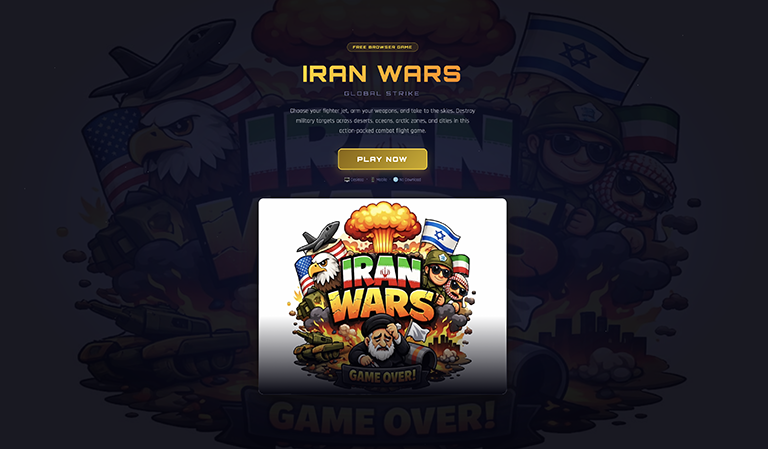
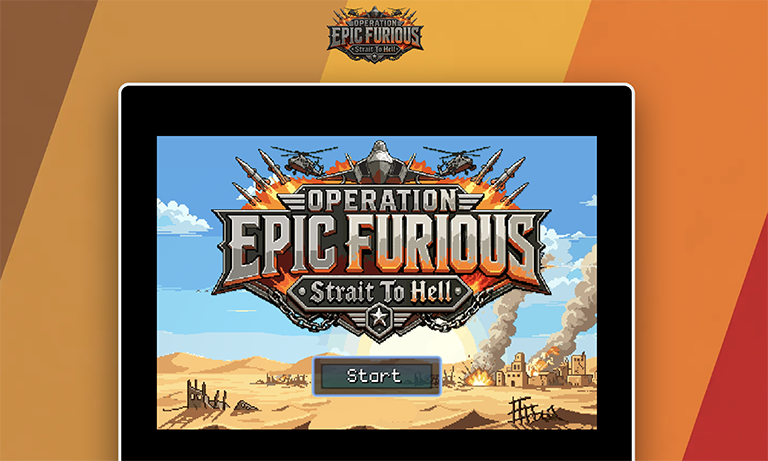
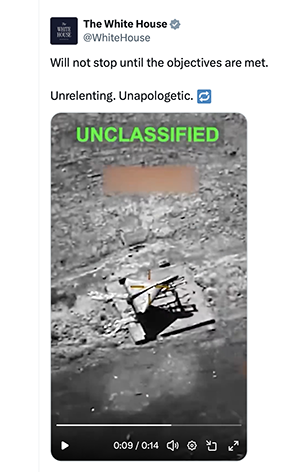 Pro-Iran networks countered with AI-generated content, including Lego-style videos pitched at global audiences. Satirical browser games such as Operation Epic Furious: Strait to Hell have emerged in response, indicating how readily the conflict has migrated into the medium.
Research shows that interactive digital environments, unlike passive media, enable participation, identity formation and social reinforcement in ways that can normalise violent narratives.
Gaming platforms such as Roblox and Minecraft allow users not only to observe but to simulate conflict. Adolescents are especially vulnerable at critical stage of cognitive and identity development, they are highly sensitive to peer validation and emotionally charged content.
The exposure is significant. Australian children aged 4 to 12 spend an average of more than two hours daily on gaming platforms; teens spend more than 14 hours a week. Meanwhile, over 60% of teens aged 13 to 17 in urban India spend around three hours each day on social media and gaming.
 The issue is not only time, but content. Last year, the Australian Federal Police warned that 12- to 17-year-olds could readily access extremist material online, and a Senate inquiry found that gaming environments were being used to radicalise and recruit younger users.
This trajectory should be expected to worsen as extremist groups increasingly exploit gaming platforms and associated communication channels that once hosted benign peer-to-peer interaction.
The large number of gamers combined with limited moderation of content and player chats within the gaming ecosystem encourages harmful sub-communities to grow, including those linked to extremist narratives or co-ordinated information operations.
The Indo-Pacific region is seeing first-hand the scale of gaming-related radicalisation. Singapore and Malaysia, for example, have seen teenagers as young as 15 detained after being radicalised through gaming platforms.
This trajectory should be expected to worsen as extremist groups increasingly exploit gaming platforms and associated communication channels that once hosted benign peer-to-peer interaction.
A range of responses, but gaps remain
Governments are responding in different ways. Jordan, Oman, Turkey and Qatar have restricted platforms such as Roblox, citing child safety. China bans games for anti-communist content; Russia rejects those that promote LGBT themes.
Australia has been building its own response. The ban on social media for under-16s acknowledges the vulnerability of young users and may narrow the pathway into radicalisation during formative years.
In April, the eSafety Commissioner issued legally enforceable transparency notices to Roblox, Minecraft, Fortnite and Steam, which requires the gaming giants to report how they’re protecting children from exposure to harm and meeting online safety expectations. Non-compliance would attract penalties of up to A$825,000 per day, and separate breaches of the Online Safety Codes carrying fines of up to A$49.5 million.
A gap remains, however. Young users can still encounter conflict narratives, propaganda and extremist material through browser-based games and less regulated platforms that fall outside the existing framework.
A gap remains, however. Young users can still encounter conflict narratives, propaganda and extremist material through browser-based games and less regulated platforms that fall outside the existing framework. Games such as Iran Wars require no age verification.
India’s 2025 Promotion and Regulation of Online Gaming Act is a serious attempt to put the gaming ecosystem in check. It bans real-money gaming, restricts associated advertising and financial transactions, and, through accompanying rules that took effect on 1 May 2026, mandates age-gating, parental controls and grievance redressal.
Yet enforcement is hampered by offshore operators and jurisdictional gaps. Additionally, the Act’s centre of gravity lies on protection from financial and consumer harm, providing little explicit attention to how gaming environments intersect with the radicalisation of vulnerable groups.
A bilateral dialogue
The complementarity is obvious. India offers Australia a model for legislative architecture that treats gaming as critical social infrastructure. Australia offers India a model for youth-centred online safety regulation backed by real financial penalties, and hard-won lessons from its own experience of radicalisation in gaming spaces.
The two countries already share a Framework Arrangement on Cyber and Cyber-Enabled Critical Technology Co-operation, signed in 2020, but its focus has been mainly on infrastructure. Extending it to online content ecosystems, age verification, and gaming-platform governance would be timely.
A bilateral dialogue on these issues could also serve as a reference point for other middle power democracies facing the same challenge.
This article first appeared on the ASPI Strategist, and is republished under a Creative Commons Licence; you can read the original here.
About the Authors
 Dr Soumya Awasthi is a Fellow at the Centre for Strategy, Security and Technology at the Observer Research Foundation. She is also a Visiting Faculty at the School of International Relations and Peace Studies at the Nalanda University, Bihar. Dr Awasthi is a professional with experience of over a decade in the field of security and geopolitical studies. Previously she was a Consultant with the Tony Blair Institute for Global Change and an associate Fellow with the Vivekananda International Foundation. Her research encompasses India’s National Security issues, counter-terrorism, counter radicalization and security issues in South Asia.
 Dr Fitriani is a Senior Analyst with the Australian Strategic Policy Institutes Cyber, Technology and Security Program. Her research focuses on hybrid threats in the Indo-Pacific, as well as foreign policy and non-traditional security issues. She is a political scientist by training, specialising in International Relations, defence and security in Southeast Asia. With her expertise in cybersecurity and women, peace and security, she has contributed to research project with UN Women, Oxfam, Peace Research Institute Oslo, Google and ASEAN Institute for Peace and Reconciliation. Dr Fitriani holds a PhD in Security and Defence Studies from Cranfield University in the UK.
Images: screen grab from Iranian video (top) – APT via YouTube; screen grab from White House video (middle) – White House via X; game front pages (lower): Iran Wars and Epic Furious.