

Voice communication is, and always will be, a critical lifeline for our emergency workers. For police officers and other front-line responders, resilient and reliable mission-critical voice enables situational awareness, coordination and safety, especially in unpredictable or high-stress environments.
As policing demands evolve and data becomes even more crucial, the debate around mission-critical communications often focuses on a binary choice.
As policing demands evolve and data becomes even more crucial, the debate around mission-critical communications often focuses on a binary choice; the trusted reliability of land mobile radio (LMR), versus broadband’s data capabilities.
In a recent white paper I co-authored, I set out a comparison of TETRA-based LMR versus broadband critical communications networks. What became clear through our research, was that for a number of reasons, the future of public safety communications shouldn’t hang on a single technology, but on a robust combination of technologies that provide users with the level of features, functionality, resilience and redundancy they require.
Why TETRA still matters
TETRA continues to be the gold-standard for mission-critical voice communications thanks to its unrivalled reach and resilience.
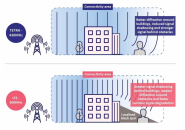
This is partly because lower-frequency TETRA signals diffract more effectively around physical obstacles and suffer lower building-entry loss. Conversely, broadband signals can drop off abruptly behind obstacles and underperform indoors without extensive, site-specific enhancements. By relying solely on a broadband network, agencies risk exposing officers to localised black spots where communication can abruptly stop.
In practical terms, TETRA’s ~400MHz frequency offers better propagation, with lower path loss and more reliable wide‐area coverage, than broadband operating at ~800MHz.
Additionally, during major incidents, severe weather or high public demand, network architectures behave very differently.
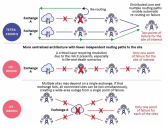
TETRA networks, which are purpose-built for mission-critical communications, typically offer higher and more predictable resilience with multiple redundancies. Commonly, TETRA architecture uses dedicated spectrum, hardened sites and dual transmission paths to avoid single points of failure and ensure the network continues to operate, with direct mode (DMO) acting as the final service continuity mechanism.
By contrast, in most cases, broadband relies on shared commercial infrastructure not designed for mission-critical continuity, creating multiple interdependencies and potential single-exchange vulnerabilities.
Responders rely on communication systems that behave consistently during dangerous or rapidly evolving situations. Shared commercial infrastructure was simply not designed for this, and puts this consistency at risk.
TETRA’s performance in storms, power cuts and major incidents has created long-standing user trust, its behaviour during degraded conditions is well understood.
The Case for Convergence
The U.K. is not alone in navigating this transition, but almost all countries around the world have adopted a different approach by retaining TETRA/LMR as their mission-critical communications for voice well into the 2030s, while trialling broadband, low Earth orbit (LEO) satellites and other technologies on top to provide additional capabilities.
It’s important to remember that what we’re talking about here is not just a piece of technology – in emergency situations it can be the difference between life and death.
For example, in the U.S., we’re seeing first responders using radios which unify networks including LMR, 5G, Wi-Fi and LEO satellites. A prime example of a layered network approach.
It’s important to remember that what we’re talking about here is not just a piece of technology – in emergency situations it can be the difference between life and death.
With that in mind, the most robust strategy for operational readiness is progressive integration. By retaining TETRA as the primary platform for mission-critical voice while progressively integrating broadband and other technologies in a layered approach, agencies guarantee the level of redundancy they require today, while unlocking enhanced situational awareness as broadband capabilities mature.
The future of mission-critical communications isn’t about choosing one technology over another. It’s about leveraging a combined approach so that, no matter the environment, the call for backup always goes through.
I will be talking about this topic further at Critical Communications World (CCW) in London on 17 June 2026, 14:00-14:20 in Theatre A. I would encourage you to attend and ask any questions you may have.
You can also read my whitepaper ‘Comparative assessment of TETRA versus LTE-based PPDR networks’ here.
 Charles is a highly experienced Partner with 25 years in the telecommunications and tech industry. As a strategy and transaction Partner he covers mobile and fixed operators, networks, towercos and digital infrastructure, B2B providers, and the wider supply chain. He has particular focus on critical national infrastructure and its role economy.
As an Engineer, Charles is able to understand technical matters and linking them to commercial models and financial investment and returns.
We specialise in making sense of challenges and opportunities in the technology, media and telecoms (TMT) sectors in order to help clients around the world make critical business decisions.
For more than 35 years, our global consulting teams have helped clients thrive using rigorous methodologies that deliver real-world results for businesses. Our industry specialist consultants stand ready to advise and inform, supporting clients globally to respond to industry changes and disruptions from new competitors.
Delivering tangible benefits to clients across the entire telecoms landscape, including investors, communications and digital service providers, vendors, private equity and infrastructure funds, governments, regulators, broadcasters and content providers, our consultants understand the distinct local challenges facing clients, in addition to the wider effects of global forces.